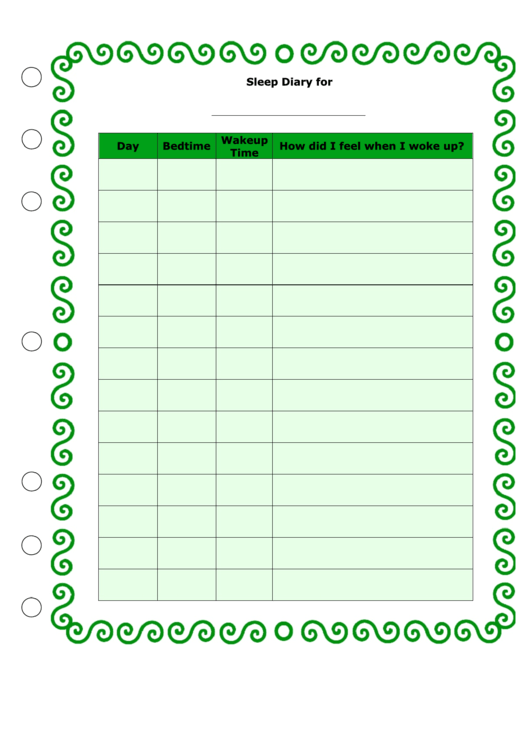
Sleep Diary Template: A Guide to Better Sleep
A sleep diary, also known as a sleep log, is a powerful tool for understanding and improving your sleep habits. It’s a detailed record of your sleep patterns and related behaviors, providing valuable insights into the factors influencing your sleep quality and duration. By consistently tracking this information, you can identify potential problems, track the effectiveness of sleep interventions, and communicate effectively with healthcare professionals about your sleep concerns. This guide will explore the components of a comprehensive sleep diary template and how to use it effectively.
Key Components of a Sleep Diary Template
A good sleep diary template should cover several essential aspects of your sleep-wake cycle. Here’s a breakdown of the common elements: 1. Date and Day of the Week: This is the foundation of your sleep diary. Recording the date allows you to track your sleep patterns over time and identify any trends related to specific days of the week. For example, you might consistently sleep later on weekends or experience more difficulty falling asleep on Mondays. 2. Bedtime (Time You Went to Bed): Note the exact time you got into bed and intended to sleep. This helps distinguish between being in bed and actually trying to sleep. 3. Sleep Latency (Time It Took to Fall Asleep): Record the estimated amount of time it took you to fall asleep after getting into bed. This is a key indicator of sleep efficiency. A long sleep latency (typically over 30 minutes) can suggest insomnia or other sleep disturbances. 4. Number of Awakenings During the Night: Document how many times you woke up during the night. Even brief awakenings can disrupt your sleep cycle and impact your overall sleep quality. 5. Duration of Each Awakening: Estimate the length of each awakening. Knowing how long you were awake helps assess the severity of the sleep disturbance. Short awakenings might be normal, but prolonged periods of wakefulness indicate a problem. 6. Wake-Up Time (Time You Woke Up Finally): Record the time you woke up for the final time and got out of bed. This is crucial for calculating your total sleep time. 7. Time You Got Out of Bed: This is different from wake-up time. Some people lie in bed for a while after waking up. Recording the time you physically got out of bed provides a more accurate picture of your daily routine. 8. Total Sleep Time: Calculate and record the total amount of time you spent asleep during the night. This is determined by subtracting the time it took you to fall asleep, the duration of awakenings, from the total time spent in bed. 9. Sleep Quality Rating (Scale of 1-10 or Descriptive Terms): Provide a subjective rating of your sleep quality. Use a numerical scale (e.g., 1-10, with 1 being the worst and 10 being the best) or descriptive terms (e.g., “very poor,” “poor,” “fair,” “good,” “very good”) to indicate how restful you felt. 10. Daytime Naps: Record any naps you took during the day, including the time they started, the time they ended, and their duration. Naps can significantly impact your nighttime sleep. 11. Daytime Activities: * Caffeine Intake: Note the time and amount of caffeine consumed throughout the day. Caffeine can interfere with sleep, especially when consumed close to bedtime. * Alcohol Intake: Record any alcohol consumption, including the time and amount. Alcohol can initially induce sleepiness, but it often disrupts sleep later in the night. * Exercise: Document any physical activity, including the type, duration, and time of day. Regular exercise can improve sleep, but exercising too close to bedtime can be stimulating. * Meals: Record the timing of your meals, particularly dinner. Eating a large meal close to bedtime can interfere with sleep. * Screen Time: Note the amount of time you spent using electronic devices (e.g., smartphones, tablets, computers) before bed. The blue light emitted from these devices can suppress melatonin production and make it harder to fall asleep. * Stressful Events: Document any significant stressors or anxiety-provoking events that occurred during the day. Stress can significantly impact sleep quality. 12. Medications: List any medications you are taking, including the dosage and time of administration. Some medications can affect sleep. 13. Notes/Comments: Include any additional information that you think might be relevant to your sleep, such as unusual events, changes in your environment, or specific feelings or thoughts you experienced before bed.
Using Your Sleep Diary Effectively
* Be Consistent: Fill out your sleep diary every day, even on weekends and holidays. Consistency is key to identifying patterns and trends. * Be Accurate: Record information as accurately as possible. Estimate times if necessary, but try to be as precise as you can. * Fill It Out in Real Time: Ideally, fill out your diary close to the events you are recording (e.g., record your bedtime right before you go to bed, your wake-up time right when you wake up). This will help you remember the details more accurately. * Review Regularly: Take time each week to review your sleep diary and look for patterns. Are there specific days or activities that consistently affect your sleep? * Share with Your Doctor: Bring your sleep diary to your doctor or sleep specialist. It will provide them with valuable information about your sleep habits and help them diagnose any sleep disorders.
Benefits of Using a Sleep Diary
* Identify Sleep Patterns: Reveals trends in your sleep habits and helps pinpoint potential problems. * Track Progress: Allows you to monitor the effectiveness of sleep interventions (e.g., changes in diet, exercise, or sleep environment). * Improve Communication with Healthcare Professionals: Provides detailed information to your doctor, facilitating accurate diagnosis and treatment. * Increase Self-Awareness: Enhances your understanding of the factors that influence your sleep. * Empowerment: Provides a sense of control over your sleep health. A sleep diary is a simple but effective tool for taking charge of your sleep. By diligently tracking your sleep patterns and related behaviors, you can gain valuable insights that will help you improve your sleep quality and overall well-being. Remember to be consistent, accurate, and review your diary regularly to reap the full benefits.
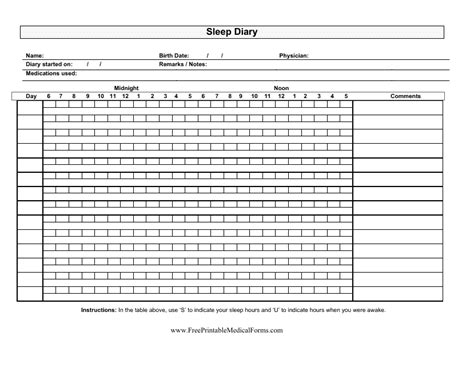 829×640 sleep diary template printable templateroller from www.templateroller.com
  530×749 sleep diary template printable from www.formsbank.com
  950×672 united kingdom sleep diary template printable templateroller from www.templateroller.com
  950×1230 sleep diary template child printable templateroller from www.templateroller.com
  950×735 sleep diary form tri state fill sign from www.templateroller.com
  829×640 sleep diary template national sleep foundation printable from www.templateroller.com
 250×200 sleep diary sleep education from sleepeducation.org  474×613 sleep diary tracking templates improve sleep sleepcom from www.sleep.com
  1140×912 kdp interior template sleep diary content design etsy from www.etsy.com
  1249×1600 child sleep diary template relax bed youtube tri state from s3.amazonaws.com
  474×709 pin sleep from www.pinterest.com