Succession Planning Template: A Roadmap for Leadership Transition
Succession planning is a critical process that ensures the smooth transition of leadership and key roles within an organization. A well-designed succession planning template provides a structured approach to identifying, developing, and preparing employees for future leadership positions. It’s not simply about replacing someone who leaves; it’s about building a pipeline of talent to sustain organizational success.
Why Use a Succession Planning Template?
Templates offer a framework, guiding organizations through the complexities of succession planning. They promote consistency, comprehensiveness, and efficiency. Using a template helps to:
- Standardize the process: Ensure all roles are evaluated using the same criteria, leading to fair and objective decisions.
- Identify high-potential employees: Provide a structured way to identify and assess individuals with the potential to move into leadership roles.
- Develop future leaders: Guide the creation of individualized development plans to address skill gaps and prepare employees for future responsibilities.
- Minimize disruption: Reduce the risk of disruption caused by unexpected departures or retirements.
- Increase employee engagement: Show employees that the organization is invested in their development and future.
- Improve knowledge transfer: Facilitate the transfer of critical knowledge and skills from departing employees to their successors.
Key Components of a Succession Planning Template
A comprehensive succession planning template should include the following components:
1. Role Identification and Analysis
This section focuses on identifying the critical roles within the organization that require succession planning. For each identified role, the template should capture:
- Job Title and Description: A clear and concise description of the role’s responsibilities and key functions.
- Critical Skills and Competencies: Identify the essential skills, knowledge, and abilities required to perform the role effectively. This includes both technical skills and soft skills like leadership, communication, and problem-solving.
- Potential Impact of Vacancy: Assess the potential impact on the organization if the role were to become vacant unexpectedly. This helps prioritize succession planning efforts.
- Current Incumbent Performance: Document the current incumbent’s performance, including strengths, weaknesses, and areas for improvement.
- Retirement/Departure Timeline (if known): Estimate the timeframe for the current incumbent’s departure, allowing for proactive planning.
2. Candidate Identification and Assessment
This section focuses on identifying and evaluating potential successors for each critical role. The template should include:
- Potential Successor Names: List of employees who are potential candidates for the role.
- Assessment Criteria: Define the criteria used to evaluate potential successors, aligned with the critical skills and competencies identified for the role. This may include performance reviews, 360-degree feedback, skills assessments, and interviews.
- Performance and Potential Ratings: Rate each potential successor based on their current performance and future potential. Use a consistent rating scale to ensure objectivity.
- Skills Gaps and Development Needs: Identify any skills gaps or development needs that each potential successor needs to address to be ready for the role.
- Readiness Timeline: Estimate the timeframe within which each potential successor could be ready to assume the role.
3. Development Planning
This section focuses on creating individualized development plans for each potential successor. The template should include:
- Development Goals: Define specific, measurable, achievable, relevant, and time-bound (SMART) goals for each potential successor, based on their identified skills gaps and development needs.
- Development Activities: Outline specific activities that will help the potential successor achieve their development goals. These may include:
- Training and Education: Formal training programs, workshops, or online courses.
- Mentoring and Coaching: Pairing the potential successor with a senior leader or external coach.
- Job Shadowing: Allowing the potential successor to observe and learn from the current incumbent or other experienced employees.
- Special Projects: Assigning the potential successor to lead or participate in special projects that will broaden their experience and develop their skills.
- Cross-Functional Assignments: Providing opportunities for the potential successor to work in different departments or functions within the organization.
- Timeline and Resources: Establish a timeline for completing each development activity and identify the resources required.
- Progress Tracking: Track the potential successor’s progress on their development plan and provide regular feedback.
4. Implementation and Review
This section focuses on implementing the succession plan and regularly reviewing its effectiveness. The template should include:
- Communication Plan: Outline how the succession plan will be communicated to employees and stakeholders.
- Implementation Timeline: Establish a timeline for implementing the succession plan.
- Review and Evaluation Process: Define how the succession plan will be reviewed and evaluated, including the frequency of reviews and the metrics used to assess its effectiveness.
- Plan Updates: Outline how the succession plan will be updated to reflect changes in the organization’s strategy, structure, or talent pool.
Tips for Using a Succession Planning Template
- Customize the template: Tailor the template to fit the specific needs and culture of your organization.
- Involve key stakeholders: Engage senior leaders, HR professionals, and managers in the succession planning process.
- Be objective and transparent: Use clear and objective criteria to assess potential successors. Communicate the process and outcomes to employees in a transparent manner.
- Focus on development: Emphasize the importance of development and provide opportunities for potential successors to grow and learn.
- Regularly review and update: Review the succession plan regularly and update it as needed to reflect changes in the organization.
By using a well-designed succession planning template, organizations can proactively identify, develop, and prepare future leaders, ensuring a smooth transition of leadership and sustained success.
 680×908 succession plan templates word google docs from www.template.net
  696×900 succession planning template documents word from www.dexform.com
 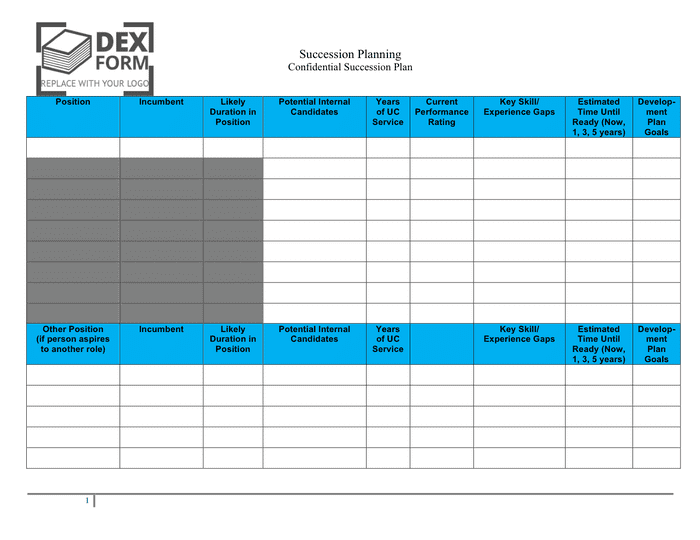 700×540 succession planning template word formats from www.dexform.com
  1689×1314 succession planning ms excel template template resume examples from www.contrapositionmagazine.com
  960×720 succession planning template sample images gallery from www.slideteam.net
  960×720 succession planning template sample powerpoint from www.slideteam.net


Tidak ada komentar:
Posting Komentar