ROI Calculator Template: Maximizing Your Investment Insights
An ROI (Return on Investment) calculator template is a valuable tool for businesses and individuals alike. It’s designed to estimate the profitability of an investment by quantifying the benefits derived from it relative to its cost. Using a template streamlines the process, ensures consistency, and aids in making informed decisions.
What is an ROI Calculator Template?
An ROI calculator template is a pre-formatted document (typically a spreadsheet or online application) that allows users to input relevant data about an investment and automatically calculates the return on investment. The template typically includes predefined fields for costs, revenues, and other financial factors affecting the investment’s performance. The core formula used is generally:
ROI = (Net Profit / Cost of Investment) x 100
The “Net Profit” represents the total revenue generated by the investment minus all associated expenses. The “Cost of Investment” is the total amount spent on acquiring and maintaining the investment. The result is expressed as a percentage, representing the return for every dollar invested.
Benefits of Using an ROI Calculator Template
- Efficiency: Pre-built templates save time and effort by providing a structured framework for data entry and calculations, eliminating the need to build a calculator from scratch.
- Accuracy: Automating the calculation process reduces the risk of manual errors, leading to more accurate and reliable ROI estimates.
- Consistency: Templates ensure that ROI is calculated consistently across different investments, allowing for a fair comparison of potential opportunities.
- Clarity: By clearly organizing data and presenting the ROI in a standardized format, templates enhance understanding and facilitate communication with stakeholders.
- Scenario Planning: Many templates allow for “what-if” analysis, enabling users to explore the impact of different assumptions on the ROI, such as changes in revenue, expenses, or investment timeline.
- Data-Driven Decisions: ROI calculators provide quantifiable insights that support data-driven decision-making, helping to prioritize investments with the highest potential return.
- Stakeholder Communication: ROI calculators can serve as a compelling tool for communicating the value of a project or investment to investors, management, or other stakeholders. Clearly presented ROI figures can justify project expenses and demonstrate the potential for financial gain.
Key Components of an ROI Calculator Template
A comprehensive ROI calculator template usually includes the following elements:
- Investment Description: A brief overview of the investment being analyzed, including its purpose, scope, and key assumptions.
- Cost of Investment: A detailed breakdown of all costs associated with the investment, including initial investment, operating expenses, marketing costs, and any other relevant expenditures.
- Revenue Projections: Forecasts of the revenue expected to be generated by the investment over a specific period, typically broken down by year or quarter.
- Net Profit Calculation: A calculation of the net profit, taking into account both revenue and expenses. This may include deductions for taxes, depreciation, and other financial factors.
- ROI Calculation: The core calculation of the ROI, based on the formula (Net Profit / Cost of Investment) x 100.
- Payback Period: The time it takes for the investment to generate enough revenue to cover its initial cost.
- Sensitivity Analysis: A section for exploring the impact of different variables on the ROI, such as changes in revenue, expenses, or discount rates.
- Visualizations: Charts and graphs to illustrate the ROI over time and provide a visual representation of the investment’s performance.
- Assumptions: A list of the key assumptions underlying the ROI calculation, such as growth rates, discount rates, and tax rates. Transparency about assumptions is crucial for maintaining credibility.
Types of ROI Calculator Templates
ROI calculator templates can be tailored to different types of investments and industries. Some common examples include:
- Marketing ROI Calculator: Used to assess the effectiveness of marketing campaigns by measuring the revenue generated relative to the marketing spend.
- Real Estate ROI Calculator: Helps investors evaluate the potential return on investment for rental properties or real estate development projects.
- Software ROI Calculator: Used to determine the benefits of implementing new software, considering factors such as increased productivity, reduced costs, and improved efficiency.
- Training ROI Calculator: Measures the impact of employee training programs on productivity, performance, and employee retention.
- Project Management ROI Calculator: Evaluates the financial benefits of a particular project compared to the costs involved.
Tips for Using an ROI Calculator Template Effectively
- Gather Accurate Data: The accuracy of the ROI calculation depends on the quality of the data used. Ensure that all cost and revenue figures are accurate and up-to-date.
- Make Realistic Assumptions: Base your assumptions on credible market research, historical data, and expert opinions. Avoid overly optimistic projections that can inflate the ROI.
- Consider the Time Value of Money: Use a discount rate to account for the time value of money, which reflects the fact that money received today is worth more than money received in the future.
- Regularly Update the Calculator: As new information becomes available, update the ROI calculator to reflect changes in costs, revenues, or market conditions.
- Use Sensitivity Analysis: Explore different scenarios to understand the potential range of outcomes and identify the factors that have the biggest impact on the ROI.
- Seek Expert Advice: If you are unfamiliar with financial analysis, consult with a financial advisor or accountant to ensure that the ROI calculation is accurate and appropriate.
Conclusion
An ROI calculator template is a powerful tool for evaluating investment opportunities and making informed financial decisions. By providing a structured framework for data entry and calculation, templates streamline the ROI analysis process, improve accuracy, and enhance communication with stakeholders. By following best practices and using templates effectively, businesses and individuals can maximize their investment insights and achieve their financial goals.
 1419×941 roi calculator excel template doctemplates from doctemplates.us
  1164×662 roi calculator excel template excel templates excel templates from www.exceltemplate123.us
  667×525 roi calculator qi macros from www.qimacros.com
 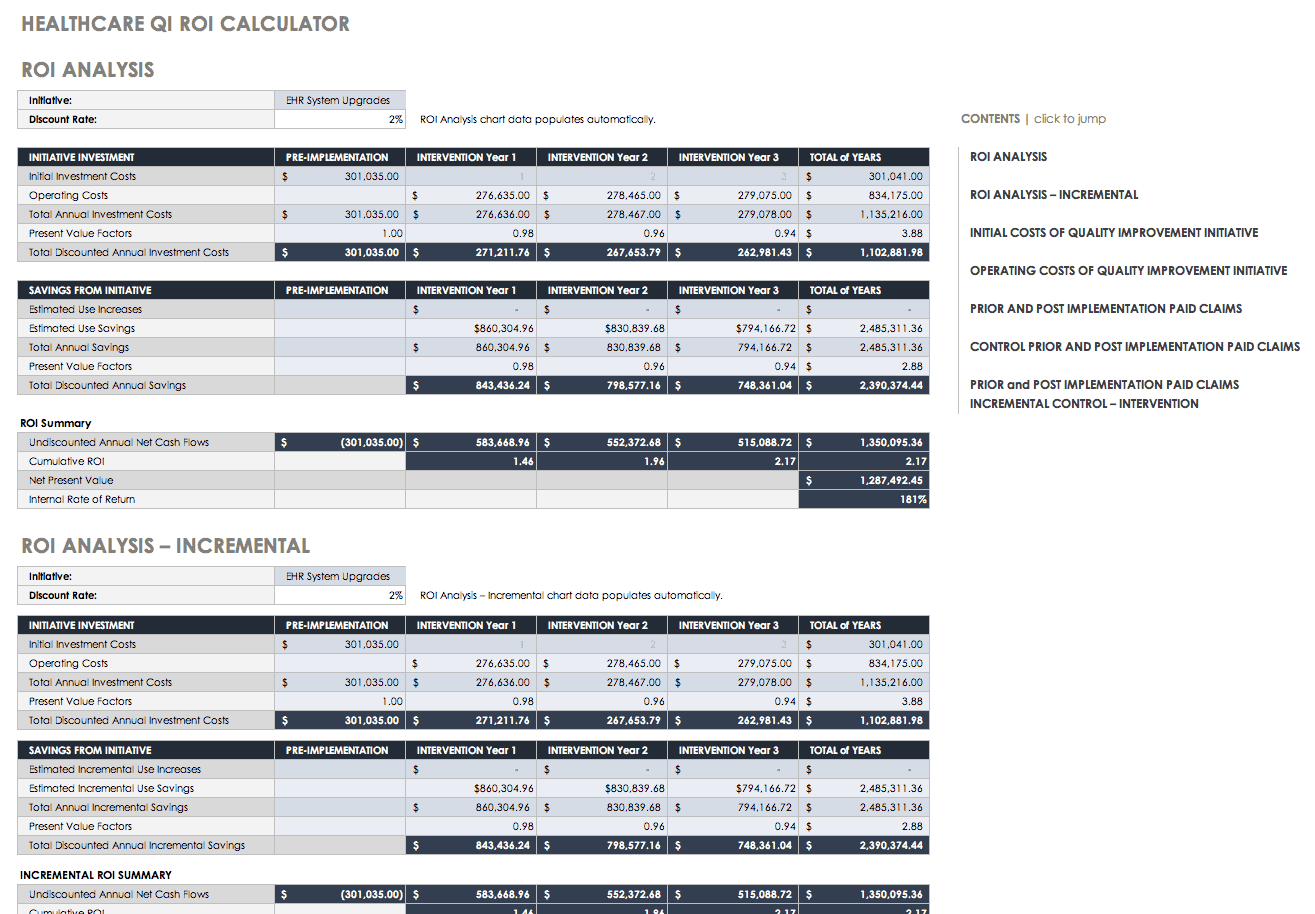 1315×914 roi templates calculators smartsheet from www.smartsheet.com
  1280×720 roi berechnung excel vorlage kostenlos from www.krugermagazine.com


Tidak ada komentar:
Posting Komentar