Exit Interview Questionnaire: A Vital Tool for Organizational Improvement
The exit interview questionnaire is a crucial tool employed by organizations to gather feedback from departing employees. It provides valuable insights into various aspects of the employee experience, helping identify areas for improvement in company culture, management practices, compensation, benefits, and overall work environment. By systematically collecting and analyzing this data, companies can make informed decisions to enhance employee retention, attract top talent, and ultimately improve organizational performance.
Purpose and Benefits
The primary purpose of an exit interview questionnaire is to obtain honest and constructive feedback from an employee who is leaving the organization. This feedback is particularly valuable because the employee is no longer subject to the power dynamics that might have influenced their responses while still employed. The benefits of conducting exit interviews and using questionnaires include:
- Identifying Problem Areas: Revealing weaknesses in management, communication, processes, and other critical areas that may be contributing to employee turnover.
- Improving Employee Retention: Understanding the reasons why employees are leaving can help organizations address underlying issues and reduce future turnover.
- Enhancing Employee Engagement: Feedback from departing employees can provide valuable insights into what motivates and engages employees, allowing companies to tailor their strategies accordingly.
- Strengthening Company Culture: Uncovering aspects of the company culture that may be detrimental to employee morale and productivity.
- Improving the Employee Experience: Identifying pain points in the employee lifecycle, from onboarding to performance management, allows for continuous improvement.
- Reducing Legal Risks: Identifying potential legal issues such as discrimination, harassment, or unfair labor practices.
- Gaining Competitive Advantage: Understanding how the company compares to competitors in terms of compensation, benefits, and work environment.
Key Components of an Effective Questionnaire
A well-designed exit interview questionnaire should cover a range of topics and be structured in a way that encourages honest and detailed responses. Some key components to include are:
- Reasons for Leaving: This is perhaps the most critical section. It should delve into the specific reasons for the employee’s departure, going beyond simple answers like “better opportunity.” Include open-ended questions allowing for detailed explanations.
- Job Satisfaction: Assessing the employee’s satisfaction with their role, responsibilities, and opportunities for growth. Questions should cover aspects like workload, challenges, and alignment with skills and interests.
- Management and Leadership: Gathering feedback on the employee’s relationship with their manager, leadership style, and the overall effectiveness of management practices. Questions should address communication, support, fairness, and recognition.
- Work Environment: Evaluating the overall work environment, including factors like team dynamics, communication, collaboration, and the level of stress.
- Compensation and Benefits: Assessing the employee’s satisfaction with their salary, benefits package, and opportunities for advancement. This section should explore whether the compensation was competitive and whether the benefits met the employee’s needs.
- Training and Development: Gathering feedback on the effectiveness of training programs and opportunities for professional development. Questions should cover the availability of training, its relevance to the employee’s role, and its impact on their skills and career progression.
- Company Culture: Assessing the employee’s perception of the company culture, including values, ethics, and the overall sense of community. Questions should explore whether the employee felt valued, respected, and supported.
- Overall Experience: Providing an opportunity for the employee to share any other comments or suggestions regarding their experience with the company. This is often an open-ended section where employees can provide additional insights that may not have been covered in previous questions.
Question Types and Format
The exit interview questionnaire should utilize a mix of question types to gather comprehensive feedback. Common question types include:
- Multiple Choice: Useful for gathering quantitative data and identifying trends.
- Rating Scales (Likert Scales): Allowing employees to rate their agreement or satisfaction with various statements on a scale (e.g., 1-5, Strongly Disagree to Strongly Agree).
- Open-Ended Questions: Providing opportunities for employees to elaborate on their answers and provide detailed explanations. These questions are crucial for gathering qualitative data and understanding the “why” behind the responses.
The format of the questionnaire should be clear, concise, and easy to understand. Avoid using jargon or overly complex language. The questionnaire should also be designed to be anonymous, or at least assure the employee that their responses will be kept confidential and used for constructive purposes.
Best Practices for Implementation
To maximize the effectiveness of exit interview questionnaires, organizations should follow these best practices:
- Administer the Questionnaire Consistently: Ensure that all departing employees are given the opportunity to complete the questionnaire.
- Ensure Anonymity and Confidentiality: Clearly communicate that responses will be kept confidential and used for constructive purposes. This encourages honest feedback.
- Analyze the Data Regularly: Review the data collected from exit interview questionnaires on a regular basis to identify trends and patterns.
- Take Action on the Feedback: Use the insights gained from exit interviews to implement changes and improvements within the organization.
- Communicate the Results and Actions: Share the findings of the exit interviews and the actions taken as a result with employees (without revealing individual responses). This demonstrates that the organization values their feedback.
- Train Interviewers (if applicable): If conducting face-to-face exit interviews, ensure that interviewers are properly trained to ask probing questions and create a comfortable environment for the departing employee.
- Use a Standardized Questionnaire: Implement a standardized questionnaire to ensure consistency and allow for meaningful comparisons over time.
Conclusion
The exit interview questionnaire is a powerful tool for organizations seeking to improve employee retention, enhance employee engagement, and create a more positive and productive work environment. By carefully designing and implementing these questionnaires, organizations can gain valuable insights into the employee experience and make informed decisions that benefit both employees and the organization as a whole. The key is not just to collect the data, but to analyze it, act upon it, and communicate the changes that result from it.
 900×1200 sample exit interview questionnaire forms ms word from www.sampleforms.com
  546×702 exit interview questionnaire form from www.stabnet.org
 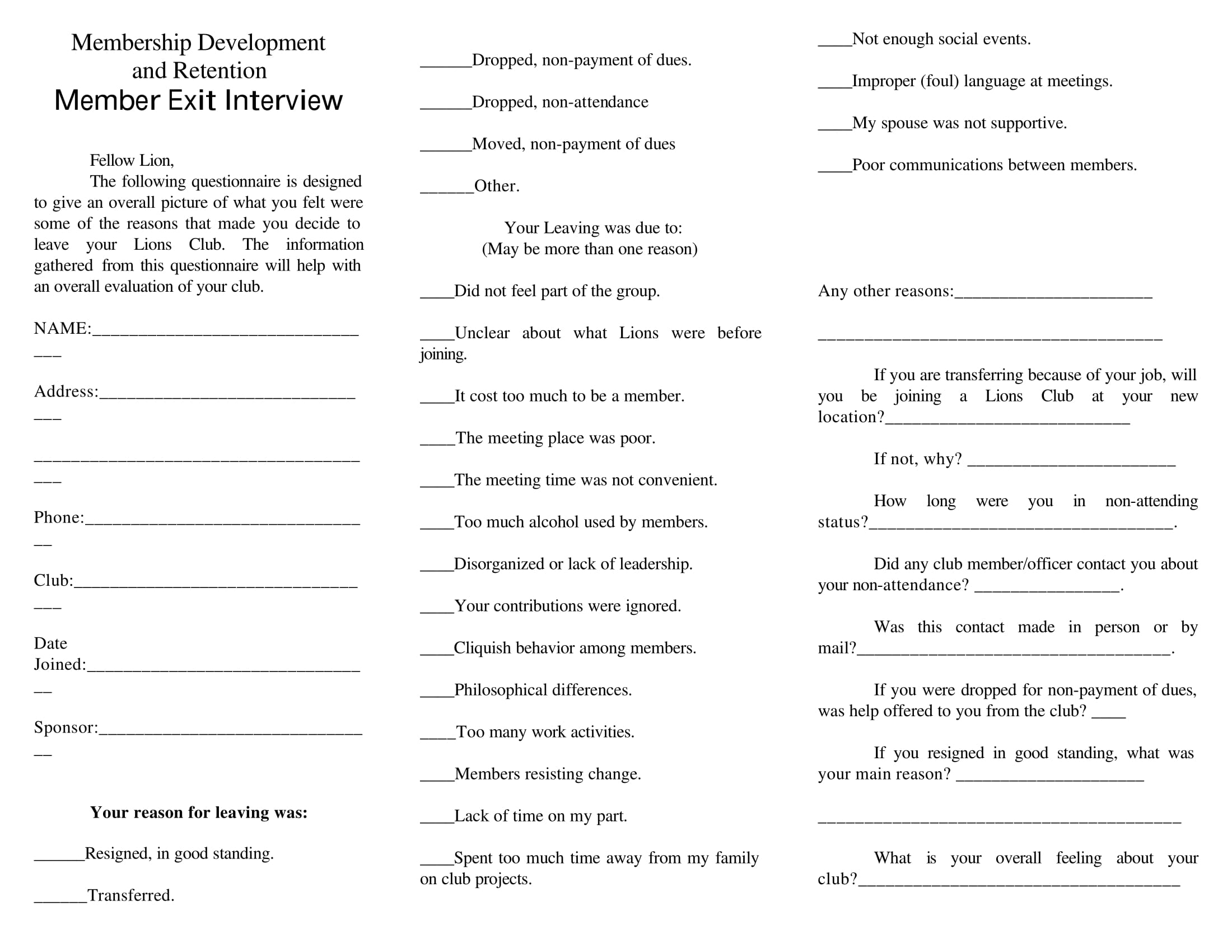 2200×1700 employee exit questionnaire examples from www.examples.com
  1932×2500 exit interview templates forms templatelab from templatelab.com
 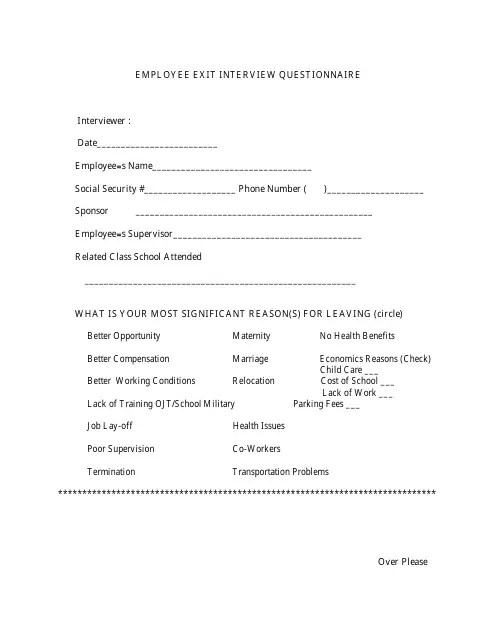 495×640 employee exit interview questionnaire template fill sign from www.templateroller.com


Tidak ada komentar:
Posting Komentar