Interview Evaluation Form: A Comprehensive Guide
The interview evaluation form is a crucial tool in the hiring process, providing a structured and standardized method for assessing candidates. It ensures objectivity, fairness, and consistency, ultimately leading to better hiring decisions. A well-designed form allows interviewers to systematically record their impressions and ratings, fostering a more data-driven and less biased evaluation of each applicant.
Why Use an Interview Evaluation Form?
The benefits of using a standardized interview evaluation form are numerous:
- Reduced Bias: Forms prompt interviewers to focus on pre-defined criteria, minimizing the influence of subjective feelings and biases. This promotes a fairer and more equitable assessment process.
- Improved Consistency: Standardized questions and scoring scales ensure that all candidates are evaluated using the same yardstick. This enables a more accurate comparison between applicants.
- Enhanced Objectivity: The form requires interviewers to document specific examples and justifications for their ratings, reducing the impact of gut feelings and personal preferences.
- Data-Driven Decision Making: Evaluation forms provide quantifiable data that can be analyzed and compared to identify the most promising candidates. This information can also be used to improve the hiring process over time.
- Legal Protection: Documented evaluations provide evidence of a fair and objective hiring process, which can be crucial in the event of legal challenges related to discrimination or unfair hiring practices.
- Structured Interviews: The form encourages structured interviews with predetermined questions, ensuring that all essential areas are covered.
- Better Collaboration: When multiple interviewers are involved, the forms facilitate discussion and comparison of candidate assessments, leading to a more informed consensus decision.
Key Components of an Effective Interview Evaluation Form
A robust interview evaluation form typically includes the following sections:
- Candidate Information: Name, position applied for, interview date, and interviewer name.
- Core Competencies: This section assesses the candidate’s skills and abilities relevant to the job requirements. Examples include:
- Technical Skills: Proficiency in specific software, tools, or methodologies.
- Communication Skills: Clarity, conciseness, and effectiveness in verbal and written communication.
- Problem-Solving Skills: Ability to analyze problems, identify solutions, and make sound decisions.
- Teamwork Skills: Ability to collaborate effectively with others and contribute to a positive team environment.
- Leadership Skills: Ability to motivate, influence, and guide others (if applicable).
- Experience and Qualifications: Verification of the candidate’s work history, education, and certifications. This section might include questions about specific accomplishments, responsibilities, and challenges faced in previous roles.
- Cultural Fit: Assessment of the candidate’s alignment with the organization’s values, work style, and team dynamics. Questions might explore their approach to teamwork, conflict resolution, and adaptability.
- Motivation and Interest: Evaluation of the candidate’s enthusiasm for the position and the company. This section might explore their career goals, reasons for applying, and understanding of the company’s mission.
- Behavioral Questions: These questions explore past behavior to predict future performance. Using the STAR method (Situation, Task, Action, Result) helps elicit detailed and insightful responses. Examples include:
- “Tell me about a time you faced a difficult challenge at work. How did you overcome it?”
- “Describe a situation where you had to work with a difficult colleague. How did you handle the situation?”
- Overall Assessment: A summary section where the interviewer provides an overall rating of the candidate’s suitability for the position and justifies the rating with specific examples from the interview.
- Comments and Notes: A space for the interviewer to record any additional observations, concerns, or questions that arose during the interview.
- Recommendation: A clear recommendation (e.g., “Hire,” “Do Not Hire,” “Second Interview”).
Designing an Effective Interview Evaluation Form
When creating an interview evaluation form, consider these factors:
- Job-Specific Criteria: Tailor the form to the specific requirements of the role. Identify the essential skills, knowledge, and attributes needed for success.
- Clear and Concise Language: Use clear and unambiguous language to avoid confusion and ensure that all interviewers interpret the questions consistently.
- Rating Scales: Use a consistent rating scale (e.g., 1-5, Poor to Excellent) for each competency. Define what each rating represents to ensure objectivity. Provide behaviorally anchored rating scales (BARS) that describe specific behaviors associated with each rating level.
- Open-Ended Questions: Include open-ended questions to encourage interviewers to provide detailed explanations and examples to support their ratings.
- Easy to Use: Design the form to be user-friendly and easy to navigate. A well-designed form will save time and improve the accuracy of the evaluation process. Consider using electronic forms for ease of access, storage, and analysis.
- Regular Review and Updates: Review and update the form periodically to ensure that it remains relevant and effective. Solicit feedback from interviewers to identify areas for improvement.
Best Practices for Using Interview Evaluation Forms
To maximize the effectiveness of interview evaluation forms, follow these best practices:
- Train Interviewers: Provide comprehensive training to interviewers on how to use the form effectively, including how to ask behavioral questions, interpret responses, and assign ratings.
- Use the Form Consistently: Ensure that all interviewers use the same form for all candidates applying for the same position.
- Take Detailed Notes: Encourage interviewers to take detailed notes during the interview to support their ratings and comments.
- Avoid Halo Effect: Be aware of the halo effect, where a positive impression in one area influences the overall assessment. Focus on evaluating each competency independently.
- Focus on Job-Related Criteria: Base evaluations on job-related criteria only, and avoid considering factors that are not relevant to the candidate’s ability to perform the job.
- Provide Feedback: Share feedback with candidates, especially those who are not selected, to help them improve their interviewing skills.
By implementing a well-designed interview evaluation form and following these best practices, organizations can significantly improve the quality of their hiring decisions and build a stronger, more talented workforce.
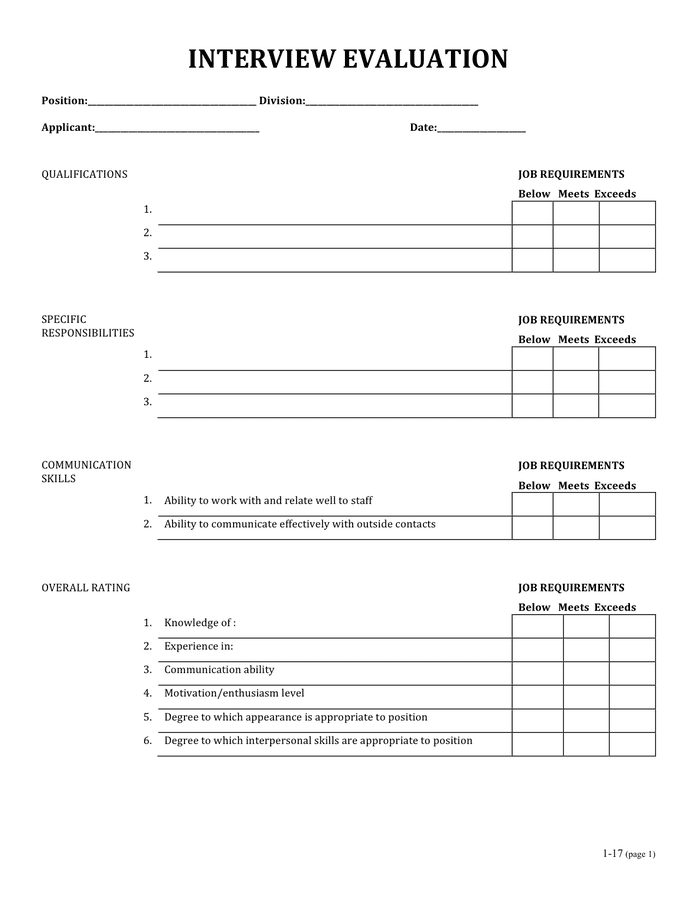 696×900 interview evaluation form documents word excel from www.dexform.com
  696×900 job interview evaluation form word formats from www.dexform.com
  696×900 employment interview evaluation form word formats from www.dexform.com
  768×1024 interview evaluation form templates word excel from www.formsbirds.com
 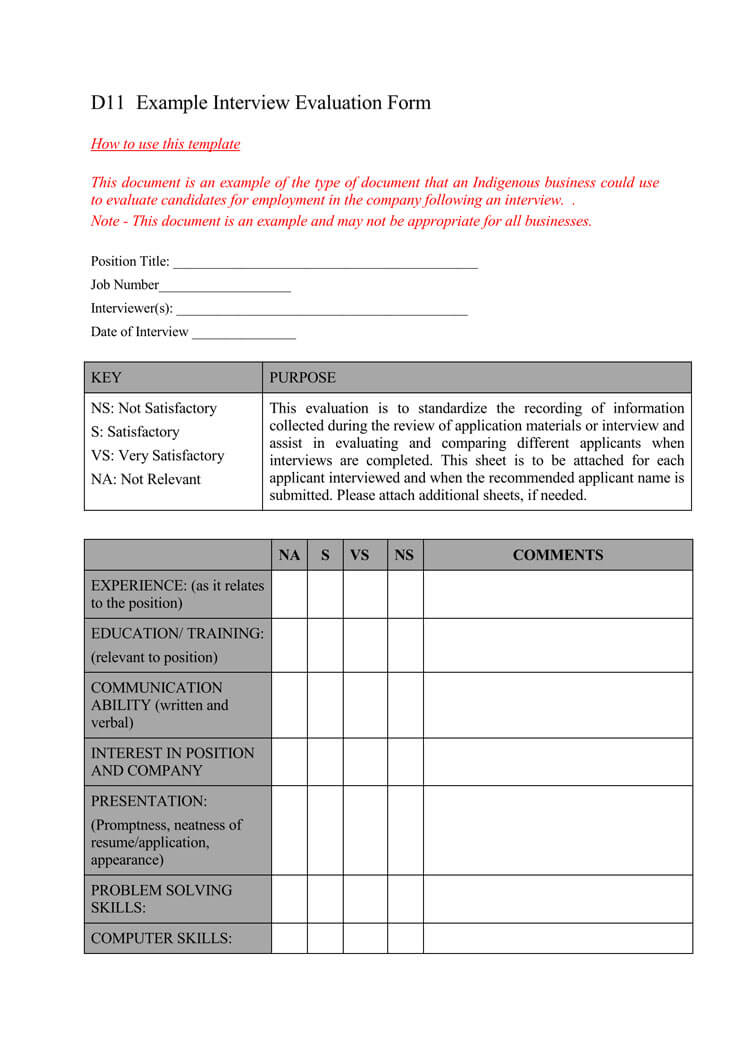 750×1061 interview evaluation forms manager candidate from www.doctemplates.net
  814×1066 interview evaluation form examples format from www.examples.com
  638×826 interview evaluation form from www.slideshare.net
  640×800 interview evaluation form fillable printable forms handypdf from handypdf.com
  696×900 interview evaluation form word formats from www.dexform.com


Tidak ada komentar:
Posting Komentar