Competitor Analysis Template: A Strategic Framework
A competitor analysis template is a structured document or framework used to systematically evaluate your competitors’ strengths, weaknesses, strategies, and potential threats. It provides a clear and organized way to understand the competitive landscape and informs strategic decision-making for your business. Using a template ensures consistency and thoroughness in your analysis.
Why Use a Competitor Analysis Template?
Templates offer several key advantages:
- Organization: A template provides a pre-defined structure, ensuring all relevant aspects of competitors are examined consistently.
- Efficiency: Streamlines the analysis process, saving time and effort compared to starting from scratch.
- Comprehensive Coverage: Prompts consideration of crucial areas that might otherwise be overlooked.
- Comparative Insights: Facilitates easy comparison between different competitors across various metrics.
- Data-Driven Decisions: Supports informed strategic decisions based on objective data rather than guesswork.
Key Components of a Competitor Analysis Template
A comprehensive template typically includes the following sections:
1. Competitor Identification
Purpose: Define and categorize your key competitors.
Elements:
- Direct Competitors: Businesses offering similar products or services to the same target market.
- Indirect Competitors: Businesses offering alternative solutions or catering to a slightly different market, but still addressing the same customer need.
- Potential Competitors: Emerging businesses or those operating in adjacent markets that could potentially become competitors.
- Company Overview: Basic information about each competitor (name, location, mission statement, history).
2. Products and Services Analysis
Purpose: Evaluate the features, quality, and pricing of competitor offerings.
Elements:
- Product/Service Line: Detailed description of the products or services offered.
- Features and Benefits: Analysis of the specific features and benefits of each product/service.
- Pricing Strategy: Overview of the pricing model and comparison to your own pricing.
- Quality Assessment: Evaluation of product/service quality based on customer reviews, industry reports, and personal assessment (if possible).
- Strengths and Weaknesses: Identify the advantages and disadvantages of each competitor’s products/services.
3. Marketing and Sales Strategy
Purpose: Understand how competitors promote and sell their products/services.
Elements:
- Marketing Channels: Identification of the marketing channels used (e.g., social media, search engine optimization (SEO), email marketing, content marketing, traditional advertising).
- Marketing Message: Analysis of the competitor’s brand messaging and positioning.
- Sales Tactics: Examination of their sales approach (e.g., direct sales, online sales, partnerships).
- Customer Service: Assessment of their customer service quality and responsiveness.
- Promotional Activities: Review of any ongoing or recent promotions, discounts, or special offers.
- SEO Analysis: Identify their top keywords and organic search rankings.
4. Financial Performance
Purpose: Analyze the financial health and stability of competitors (if publicly available). Even estimates can provide valuable insights.
Elements:
- Revenue: Track their annual revenue and growth rate (if publicly available or estimated).
- Profitability: Analyze their profit margins and overall financial performance (if publicly available or estimated).
- Funding: Understand their funding sources (e.g., venture capital, loans, internal funding).
- Market Share: Estimate their market share and how it compares to yours.
5. Strengths and Weaknesses (SWOT Analysis)
Purpose: Summarize the overall strengths and weaknesses of each competitor, as well as the opportunities and threats they face.
Elements:
- Strengths: Internal factors that give the competitor a competitive advantage.
- Weaknesses: Internal factors that hinder the competitor’s performance.
- Opportunities: External factors that the competitor could leverage to their advantage.
- Threats: External factors that could negatively impact the competitor’s performance.
6. Strategic Recommendations
Purpose: Identify opportunities to improve your own business based on the competitor analysis.
Elements:
- Areas for Improvement: Identify areas where your competitors outperform you and suggest improvements.
- Competitive Advantages: Highlight areas where you have a competitive advantage and recommend strategies to strengthen them.
- Market Opportunities: Identify untapped market opportunities that your competitors are not currently addressing.
- Potential Threats: Develop strategies to mitigate potential threats from competitors.
Using the Template Effectively
To maximize the value of your competitor analysis template:
- Be Thorough: Gather as much information as possible about your competitors from various sources (e.g., websites, social media, industry reports, customer reviews).
- Be Objective: Avoid bias when evaluating your competitors and focus on factual information.
- Be Consistent: Use the same template for all your competitors to ensure consistency and comparability.
- Update Regularly: The competitive landscape is constantly changing, so update your analysis regularly (e.g., quarterly or annually).
- Share Findings: Share your findings with relevant stakeholders in your organization to inform strategic decision-making.
By consistently applying a well-structured competitor analysis template, businesses can gain a deep understanding of their competitive environment, enabling them to make informed strategic decisions, identify opportunities, and mitigate potential threats.
 1686×1302 competitive analysis downloadable templates examples venngage from venngage.com
  708×906 competitive analysis templates smartsheet from www.smartsheet.com
  463×400 competitor analysis template word from lesboucans.com
 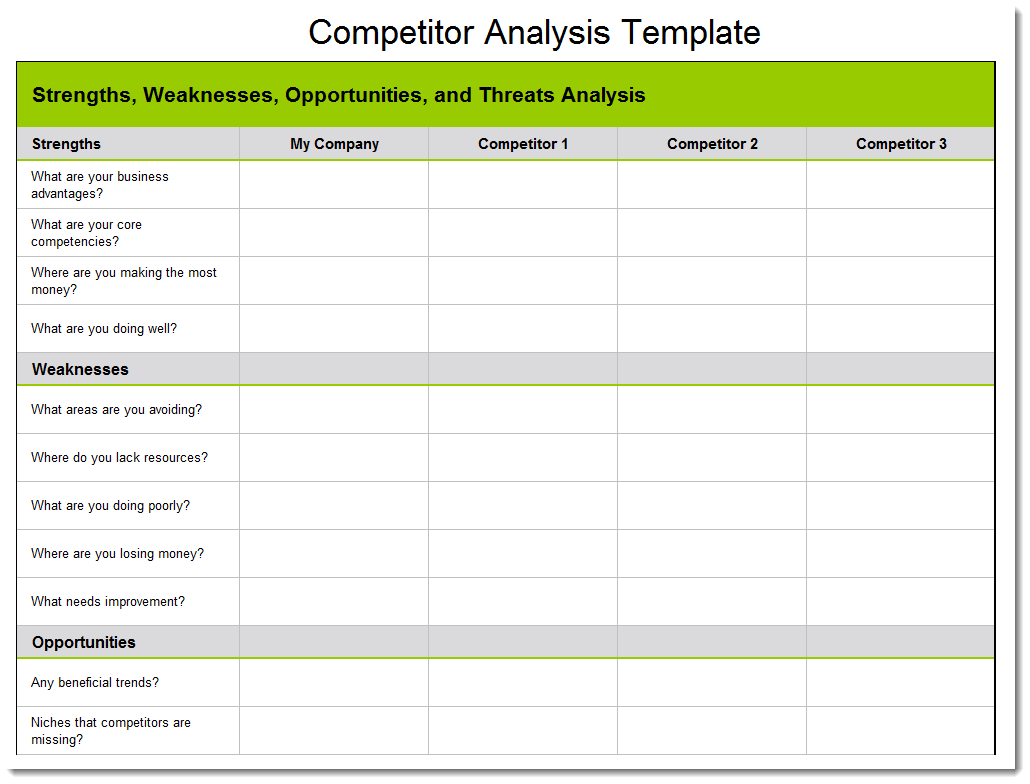 1030×784 competitor analysis template from tkodocs.com
 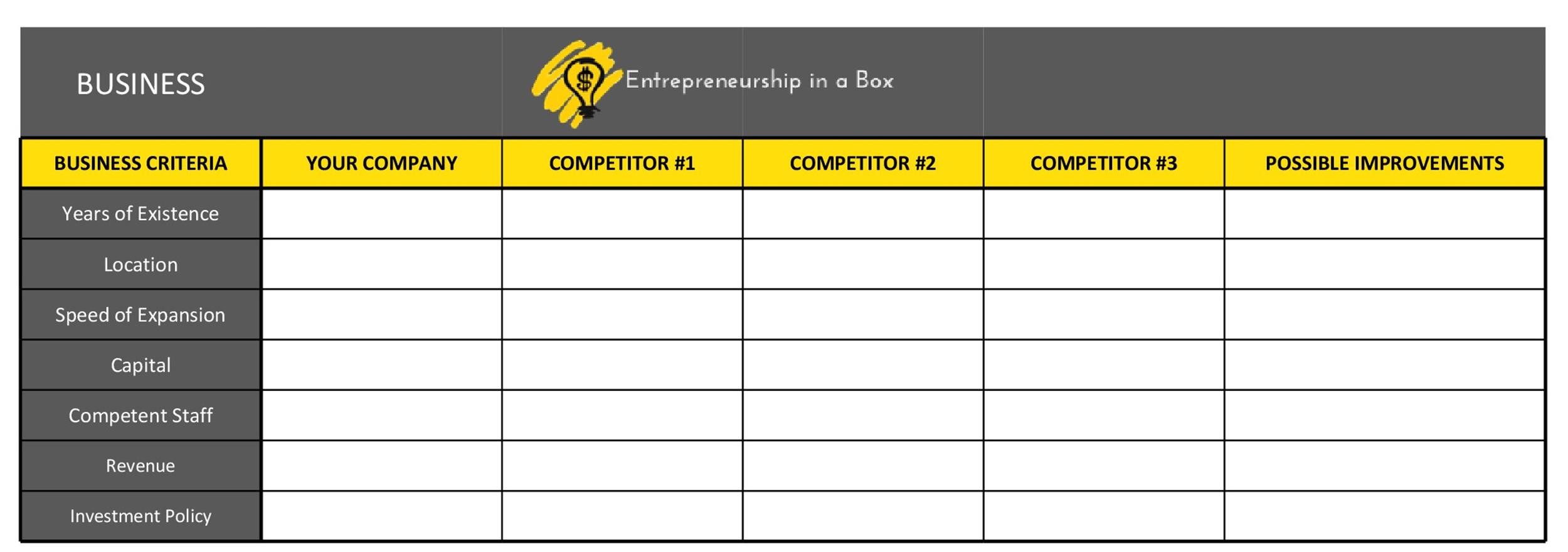 2500×880 competitive analysis templates great examples excel word from templatelab.com


Tidak ada komentar:
Posting Komentar