Pricing Strategy Template: A Comprehensive Guide
Developing an effective pricing strategy is crucial for any business, regardless of size or industry. It directly impacts profitability, market share, and brand perception. A well-defined pricing strategy template provides a structured framework for analyzing costs, understanding customer value, and setting prices that achieve business goals.
The Core Components of a Pricing Strategy Template
- Objective Definition: Start by clearly outlining your pricing objectives. Are you aiming for maximum profit, market share growth, brand positioning as a premium offering, or simply covering costs and surviving in a competitive market? Specific and measurable objectives will guide all subsequent decisions. Examples include:
- Increase revenue by 15% within the next year.
- Capture 20% market share within two years.
- Establish the product as the premium option in the market.
- Cost Analysis: Understanding your costs is fundamental. Identify all relevant costs associated with producing and delivering your product or service. This includes:
- Fixed Costs: Rent, salaries, insurance, utilities – costs that remain constant regardless of production volume.
- Variable Costs: Raw materials, direct labor, packaging – costs that fluctuate with production volume.
- Total Costs: The sum of fixed and variable costs.
- Marginal Cost: The cost of producing one additional unit.
Calculate the break-even point (the volume of sales needed to cover all costs). This provides a baseline for setting prices.
- Target Audience & Value Proposition: Define your ideal customer and understand their needs, preferences, and willingness to pay. What value do you offer that justifies your price? Conduct market research, surveys, and competitor analysis to understand customer perceptions and price sensitivity. Consider:
- Demographics: Age, income, location, occupation.
- Psychographics: Values, lifestyle, attitudes.
- Pain Points: What problems does your product/service solve?
- Perceived Value: How much are customers willing to pay for the benefits you offer?
- Competitive Analysis: Analyze your competitors’ pricing strategies, product offerings, and market positioning. Identify their strengths and weaknesses. This helps determine how your pricing compares and where you can differentiate. Consider:
- Direct Competitors: Businesses offering similar products or services.
- Indirect Competitors: Businesses offering alternative solutions.
- Price Points: The range of prices charged by competitors.
- Value Propositions: How competitors differentiate their offerings.
- Pricing Method Selection: Choose a pricing method that aligns with your objectives, cost structure, and target audience. Common methods include:
- Cost-Plus Pricing: Adding a markup to the cost of production. Simple but may not reflect market demand.
- Value-Based Pricing: Setting prices based on the perceived value to the customer. Requires a deep understanding of customer needs.
- Competitive Pricing: Setting prices in line with competitors. Can be used for price matching or undercutting.
- Premium Pricing: Setting prices higher than competitors to convey quality and exclusivity. Requires strong brand recognition.
- Penetration Pricing: Setting low prices initially to gain market share. Can be effective but may require significant investment.
- Dynamic Pricing: Adjusting prices in real-time based on demand, competition, and other factors. Common in industries like airlines and e-commerce.
- Pricing Strategy Implementation & Monitoring: Once you’ve selected a pricing method, implement it consistently across your product line or service offerings. Continuously monitor your pricing strategy’s performance. Track sales, revenue, market share, and customer feedback. Be prepared to adjust your pricing based on market changes, competitor actions, and internal performance. Consider:
- Pricing Software: Tools to automate pricing adjustments and track performance.
- A/B Testing: Experimenting with different price points to optimize sales.
- Customer Surveys: Gathering feedback on price perceptions and value.
- Legal & Ethical Considerations: Ensure your pricing practices comply with all applicable laws and regulations. Avoid price fixing, predatory pricing, and deceptive pricing practices. Maintain transparency and fairness in your pricing.
Example Scenario
Imagine you’re launching a new organic coffee brand. Your objective is to establish a premium brand while achieving a 10% market share in your target region within three years. You’ve analyzed your costs, identified your target audience (environmentally conscious coffee lovers), and researched your competitors (established organic coffee brands). You decide on a value-based pricing strategy, highlighting the superior quality, ethical sourcing, and sustainable packaging of your coffee. You set your price slightly higher than the average organic coffee to reflect the added value. You then implement a robust marketing campaign emphasizing these benefits and continuously monitor sales and customer feedback to fine-tune your pricing as needed.
Conclusion
A well-structured pricing strategy template is an invaluable tool for businesses seeking to optimize their pricing decisions. By systematically analyzing costs, understanding customer value, and monitoring performance, you can create a pricing strategy that drives profitability, enhances brand perception, and achieves your business goals.
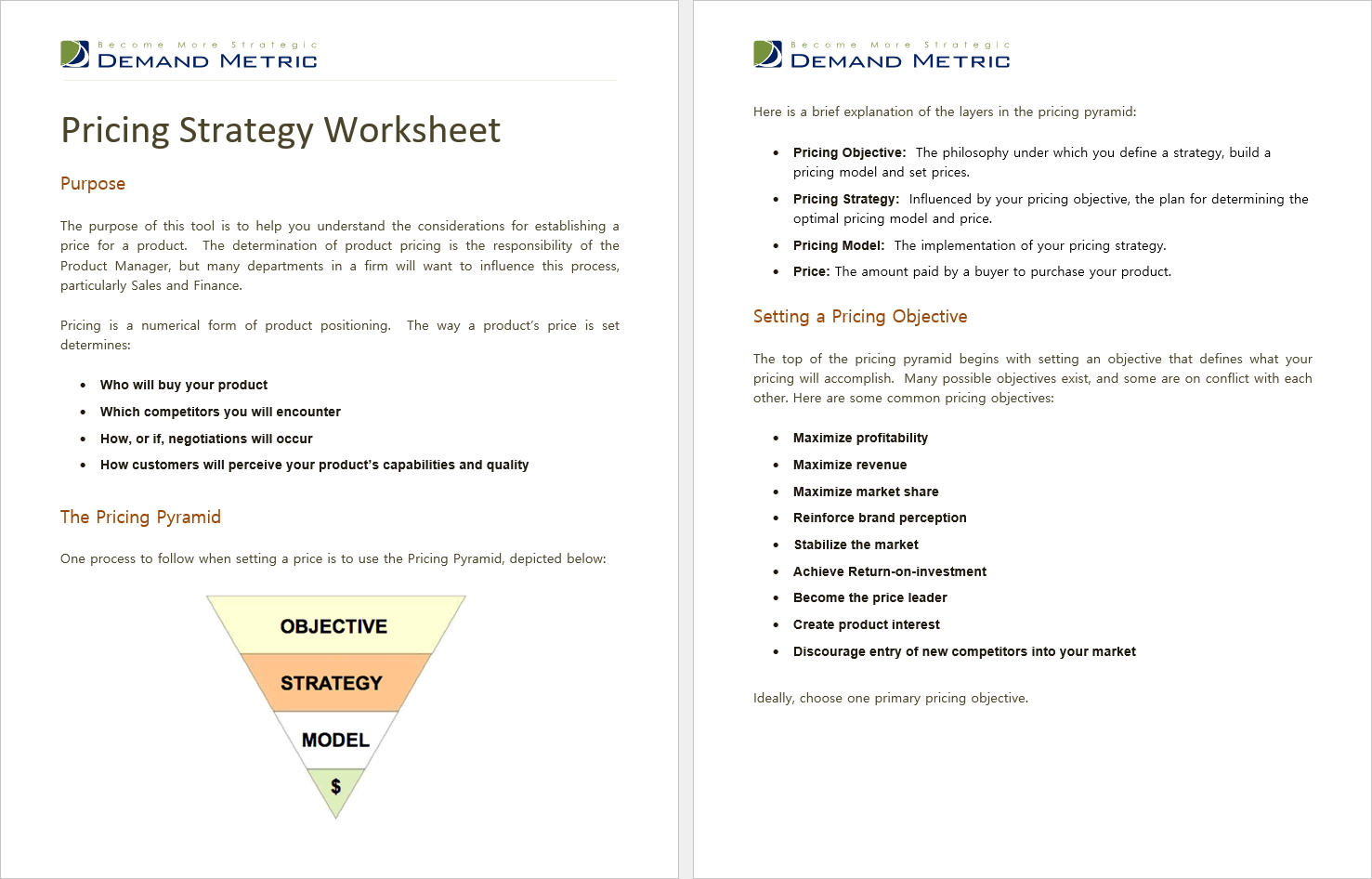 612×792 pricing strategy template word from flevy.com
  612×792 pricing strategy template word slideshow view from flevy.com


Tidak ada komentar:
Posting Komentar