“`html
Product Launch Checklist: A Comprehensive Guide
Launching a new product or feature is a pivotal moment for any business. A successful launch can drive revenue, increase brand awareness, and solidify your position in the market. However, a poorly planned launch can lead to missed opportunities, wasted resources, and damage to your reputation. This comprehensive checklist will guide you through the essential steps to ensure a smooth and impactful product launch.
I. Pre-Launch Planning (Months Before)
1. Define Your Launch Goals & KPIs
What do you hope to achieve with this launch? Be specific and measurable. Examples include:
- Target number of sales within the first month.
- Increase in website traffic.
- Number of leads generated.
- Social media engagement (shares, likes, comments).
- Customer acquisition cost (CAC).
Establishing Key Performance Indicators (KPIs) allows you to track your progress and determine the success of your launch campaign.
2. Market Research & Competitive Analysis
Thoroughly understand your target audience and the competitive landscape. Ask yourself:
- Who is your ideal customer? What are their needs and pain points?
- What are the existing solutions in the market?
- What are your competitors doing well (and not so well)?
- What is your unique selling proposition (USP)? What makes your product stand out?
This research will inform your product positioning, messaging, and marketing strategy.
3. Product Development & Testing
Ensure your product is fully functional, stable, and meets the needs of your target audience. This involves:
- Rigorous testing (alpha, beta, user testing).
- Bug fixes and improvements based on feedback.
- Documentation (user manuals, FAQs).
- Compliance with relevant regulations and standards.
A solid product is the foundation of a successful launch.
4. Develop Your Marketing Strategy
Outline your marketing plan, including:
- Target audience segmentation.
- Marketing channels (social media, email marketing, content marketing, paid advertising, public relations).
- Messaging and branding.
- Budget allocation.
- Timeline and milestones.
A well-defined marketing strategy will ensure your message reaches the right audience at the right time.
5. Create Compelling Marketing Assets
Develop engaging content to promote your product, such as:
- Website landing pages.
- Product demos and videos.
- Blog posts and articles.
- Social media content.
- Email marketing templates.
- Press releases.
High-quality assets are crucial for attracting attention and driving conversions.
6. Build a Pre-Launch Email List
Start building anticipation by collecting email addresses from interested customers. Offer incentives like early access, discounts, or exclusive content in exchange for sign-ups.
II. Launch Execution (Weeks Before & During)
7. Finalize Product & Marketing Materials
Review and finalize all product features, documentation, and marketing materials. Ensure consistency and accuracy across all channels.
8. Train Your Sales & Support Teams
Equip your sales and support teams with the knowledge and resources they need to effectively promote and support the product. Provide training on:
- Product features and benefits.
- Target audience and competitive landscape.
- Common customer questions and troubleshooting tips.
9. Execute Your Marketing Plan
Implement your marketing plan according to the established timeline. This includes:
- Scheduling social media posts.
- Sending out email newsletters.
- Running paid advertising campaigns.
- Reaching out to media outlets and influencers.
10. Monitor Performance & Gather Feedback
Closely monitor key metrics (website traffic, sales, leads, social media engagement) to track the performance of your launch campaign. Gather customer feedback through surveys, reviews, and social media monitoring.
III. Post-Launch Activities (Weeks & Months After)
11. Analyze Results & Identify Areas for Improvement
Analyze the data collected during the launch to evaluate the success of your campaign. Identify areas where you can improve your marketing efforts, product development, and customer support.
12. Iterate on Your Product Based on Feedback
Use customer feedback to make improvements to your product. This could include bug fixes, new features, or enhancements to the user experience.
13. Continue Marketing & Promoting Your Product
Don’t stop marketing your product after the initial launch. Continue to engage with your audience, create new content, and run targeted advertising campaigns to drive continued growth.
14. Provide Excellent Customer Support
Provide prompt and helpful support to customers who have questions or issues with your product. This will help build customer loyalty and positive word-of-mouth.
By following this product launch checklist, you can significantly increase your chances of a successful launch and achieve your business goals.
“`
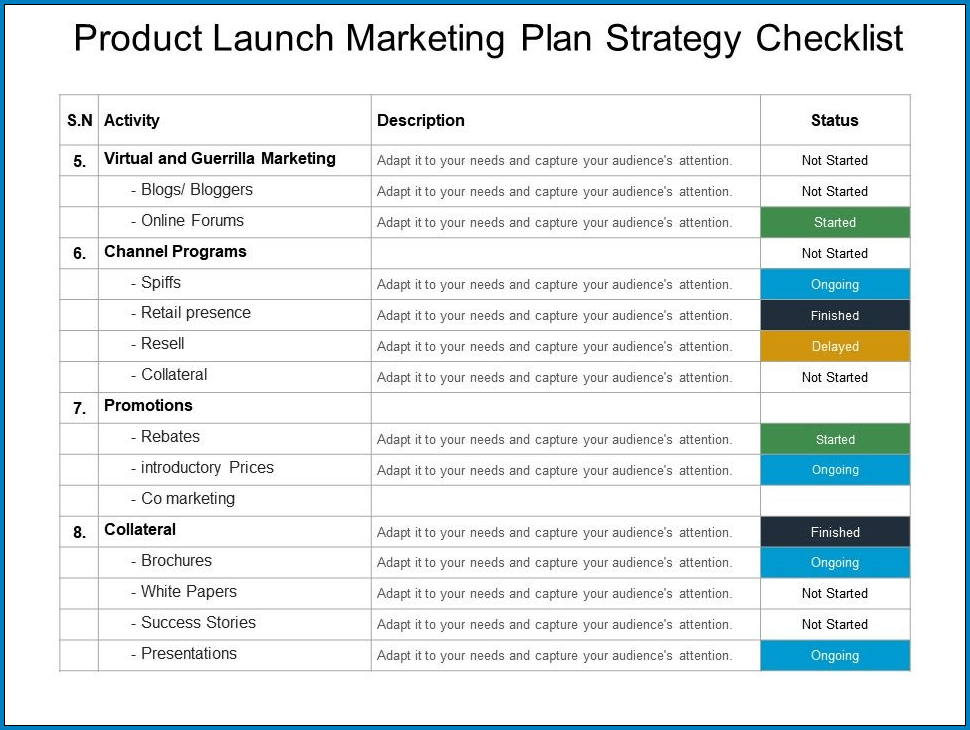 970×730 printable product launch checklist template checklist templates from www.checklist.templateral.com
  728×563 product launch checklist from www.slideshare.net
  1920×1187 pro marketers product launch checklist moz from moz.com


Tidak ada komentar:
Posting Komentar