Employee Onboarding Checklist: A Comprehensive Guide
A well-structured employee onboarding process is crucial for setting new hires up for success and fostering a positive work environment. This checklist outlines key steps and considerations for creating a seamless and effective onboarding experience.
Phase 1: Pre-Onboarding (Before the First Day)
1. Offer Letter and Contract
- ✓ Send a formal offer letter outlining the job title, responsibilities, salary, benefits, start date, and reporting structure.
- ✓ Prepare and send the employment contract for review and signature. Ensure legal compliance and clarity.
2. Pre-Arrival Communication
- ✓ Send a welcome email introducing the new hire to the team and providing essential information about the first day (dress code, arrival time, location, parking, etc.).
- ✓ Share company culture guidelines or a brief introduction to the company’s mission, values, and history.
- ✓ Gather necessary paperwork electronically (tax forms, direct deposit information, emergency contact details) to streamline the onboarding process.
- ✓ Provide a pre-reading list or introductory materials related to the role or department.
3. Workspace Preparation
- ✓ Ensure the workspace is clean, organized, and equipped with necessary supplies (computer, phone, stationery, etc.).
- ✓ Set up the employee’s computer with relevant software, access credentials, and email account.
- ✓ Prepare the employee’s access badges or security passes.
4. Onboarding Plan Creation
- ✓ Develop a detailed onboarding plan outlining the activities, meetings, and training sessions scheduled for the first week, month, and beyond.
- ✓ Assign a mentor or buddy to the new hire to provide guidance and support.
Phase 2: First Day/Week Onboarding
1. Warm Welcome and Introductions
- ✓ Greet the new hire warmly and make them feel welcome.
- ✓ Introduce them to the team members they will be working with directly.
- ✓ Conduct a tour of the office, highlighting important areas (break room, restrooms, meeting rooms, etc.).
2. HR and Legal Paperwork
- ✓ Review and complete any remaining HR and legal paperwork (benefits enrollment, confidentiality agreements, etc.).
- ✓ Explain company policies, procedures, and employee handbook.
3. Company Culture and Values
- ✓ Reinforce the company’s mission, values, and culture.
- ✓ Discuss expectations regarding communication, collaboration, and teamwork.
4. Role-Specific Training
- ✓ Provide detailed training on the employee’s job responsibilities and expectations.
- ✓ Introduce the new hire to relevant tools, systems, and technologies.
- ✓ Assign initial tasks and projects to allow the employee to apply their skills and learn on the job.
5. Initial Goal Setting
- ✓ Work with the new hire to set realistic and achievable goals for the first 30, 60, and 90 days.
- ✓ Establish clear performance metrics and expectations.
Phase 3: Ongoing Onboarding (First Month/Quarter)
1. Regular Check-ins
- ✓ Schedule regular check-ins with the new hire to address any questions, concerns, or challenges they may be facing.
- ✓ Provide feedback on their performance and progress.
2. Mentorship and Support
- ✓ Encourage ongoing communication and collaboration with the mentor or buddy.
- ✓ Provide opportunities for the new hire to network with colleagues from different departments.
3. Performance Review and Feedback
- ✓ Conduct a formal performance review at the end of the first month or quarter.
- ✓ Provide constructive feedback and identify areas for improvement.
- ✓ Adjust goals and expectations as needed.
4. Continued Learning and Development
- ✓ Provide opportunities for the new hire to expand their skills and knowledge through training programs, workshops, or conferences.
- ✓ Encourage participation in team-building activities and social events.
5. Gathering Feedback on the Onboarding Process
- ✓ Solicit feedback from the new hire on the onboarding process to identify areas for improvement.
- ✓ Use this feedback to continuously refine and optimize the onboarding program.
Key Considerations
- Customization: Tailor the onboarding process to the specific role and department.
- Technology: Leverage technology to streamline onboarding tasks and improve efficiency.
- Communication: Maintain clear and consistent communication throughout the onboarding process.
- Engagement: Keep the new hire engaged and motivated.
- Measurement: Track the effectiveness of the onboarding program by measuring key metrics such as employee retention, performance, and satisfaction.
By following this comprehensive employee onboarding checklist, organizations can ensure that new hires feel welcomed, supported, and equipped to succeed in their roles. This ultimately leads to increased employee engagement, productivity, and retention.
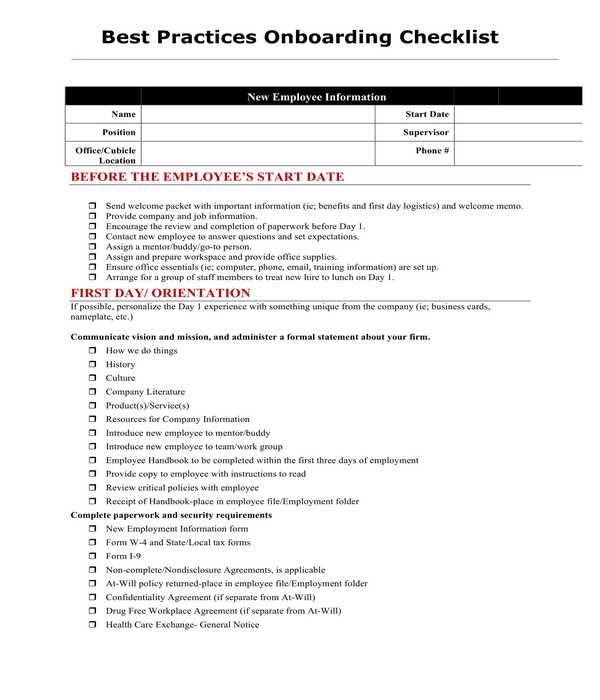 600×700 employee onboarding checklist form samples ms word from www.sampleforms.com
  1513×1129 employee onboarding checklist template excel template resume from www.contrapositionmagazine.com
  2550×3300 employee onboarding checklist templates allbusinesstemplatescom from www.allbusinesstemplates.com
  2560×1440 ultimate employee onboarding checklist intranet mobile web from www.creativewebmall.com
  1080×1080 employee onboarding checklist employee process template from www.waybook.com


Tidak ada komentar:
Posting Komentar